

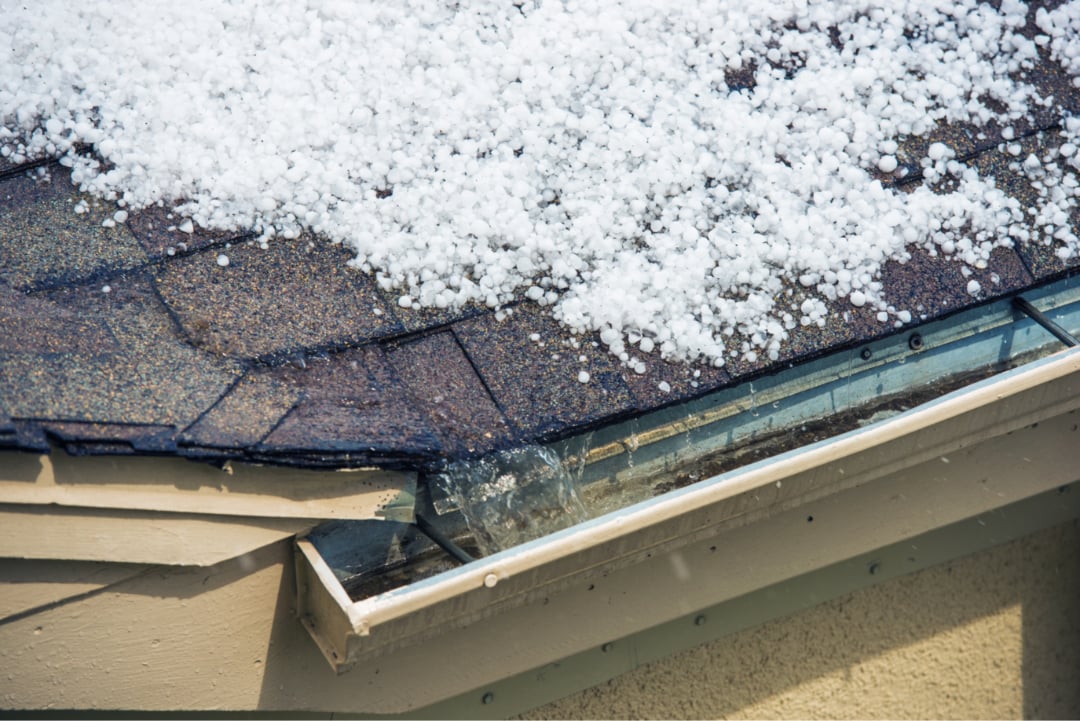
Start with a visual check from the ground: Look for sagging sections, separated seams, rust spots, and fasteners pulling away from the fascia. West Virginia University Extension recommends cleaning and inspecting a gutter system at least twice a year, more often in areas exposed to frequent severe weather—a category that fits most of the Four States. After any storm with hail or high wind, add a follow-up inspection; wind-driven debris damage isn't always visible from the ground and can lead to costly storm damage repair later.
Clear Gutters and Downspouts First
Debris buildup is the most common cause of gutter failure. Before pitch or alignment can be assessed accurately, clear the system:
- Remove leaves, seed pods, and shingle grit by hand or scoop
- Flush each downspout with a garden hose to confirm free-flowing drainage
- Check that downspout extensions carry water at least five feet from the foundation, per FEMA flood-prevention guidance
- Inspect gutter guards for trapped debris that can block flow even when installed correctly
- Look for standing water or dirt lines inside the trough after rain, a sign of an upstream clog
Regular gutter cleaning costs far less than repairing a rotted fascia board or a flooded basement.
Check Gutter Pitch and Alignment
A gutter that holds standing water usually has a pitch problem, not a debris problem. Properly installed systems slope slightly toward each downspout so water never sits in the trough. Homeowners can spot the warning signs, but correcting pitch, resetting hangers, or realigning long runs generally requires professional-level experience to properly secure wind-rated fasteners and hands-on experience.
Reinforce Gutters for Wind and Rain
Hail and wind drive most severe-storm losses nationwide. According to the Insurance Institute for Business & Home Safety, hail alone accounts for 50% to 80% of severe storm damage costs in the U.S. each year. Kansas has recorded 102 billion-dollar weather disasters since 1980, 71 of them severe storm events, according to NOAA's National Centers for Environmental Information. Reinforced hangers, larger downspouts, and impact-resistant gutter guards all lower the odds of storm-related failure.
Know When to Call a Pro
Pitch correction, hanger replacement, downspout repair, and full gutter installation require the right tools, ladder safety training, and knowledge of local rainfall loads. If a system is more than 15 years old, sagging in multiple spots, or overwhelmed during moderate rain, it's time for a professional evaluation rather than another patchwork fix.
Ready to get ahead of fall storms? Call Clear Cut Gutters or visit clearcutgutters.com to schedule a free quote for gutter cleaning, gutter guard installation, or a properly sized gutter installation for your Columbus-area home or business. Our team serves homeowners and businesses across the Four States region and can size the right system before the next storm hits.