

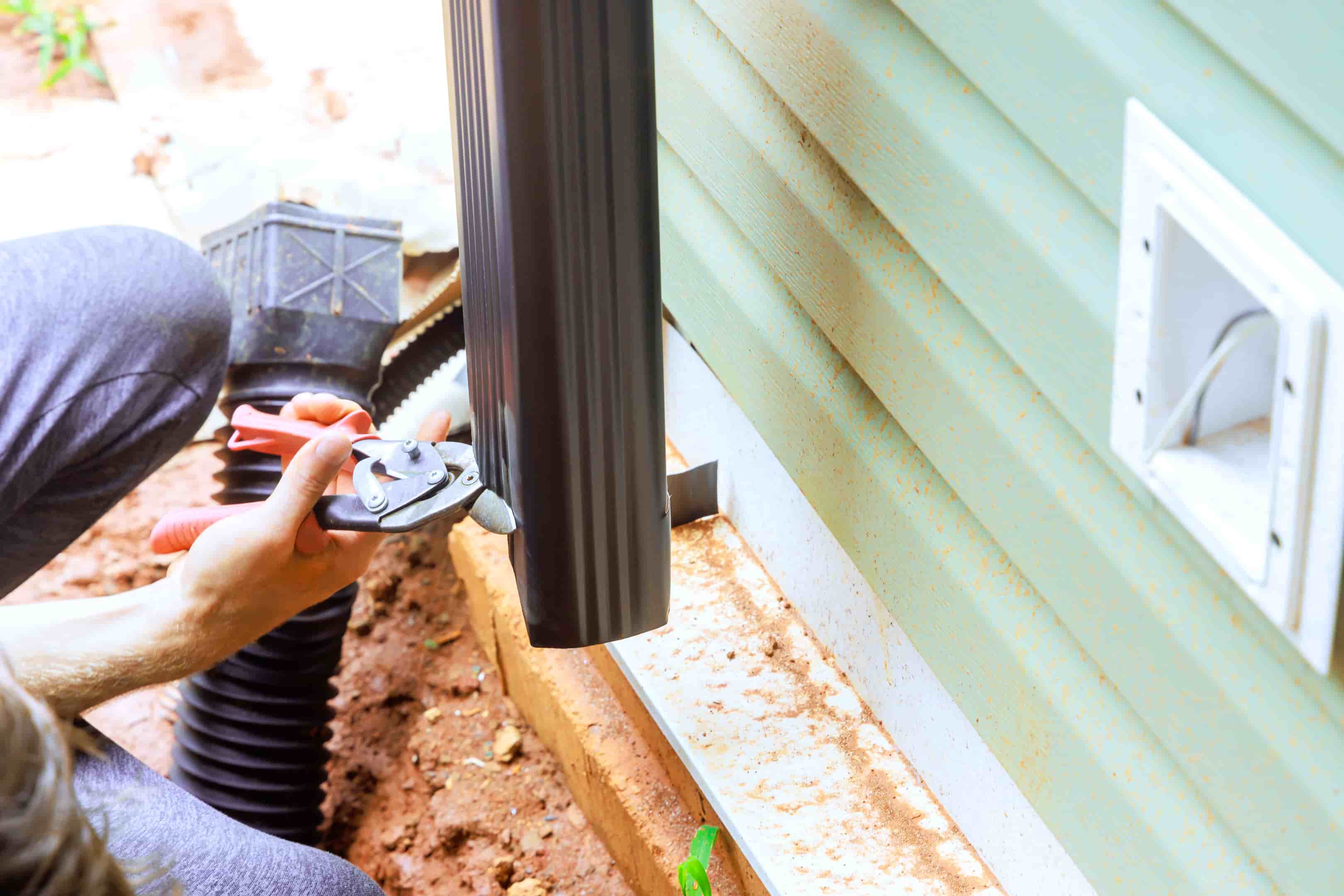
One inch of rain on a 1,000-square-foot roof produces about 623 gallons of water, according to the University of Arkansas Cooperative Extension Service’s Northwest Arkansas Stormwater Education Program. Where that water lands decides whether it soaks into the lawn or your foundation.
What Is a Downspout Extension, and Do You Need One?
A downspout extension is a pipe or channel that carries water from the downspout elbow out into the yard. K-State Research and Extension calls a sloping pipe or channel the ideal way to carry water away from a downspout. If your downspouts empty at the foundation, you need one. Water dumped there seeps toward the basement and spreads across walks, where it freezes into ice patches.
How Far Should Downspouts Extend From Your Foundation?
So how far should downspouts extend? Oklahoma State University Extension sets the minimum at 6 feet from basement walls and 2 feet from a crawl space. K-State goes further, advising that water shouldn’t collect within 15 feet of the foundation and that the ground should slope away about 1 inch per foot. The University of Missouri Extension adds that downspouts should also aim away from paved surfaces.
Are Splash Blocks Enough for Downspout Drainage?
A splash block slows water, but it rarely works on its own. The Northwest Arkansas program warns that washed-out spots at the base of a downspout let soil wash away, and it recommends adding a splash guard or extender to direct water to a lawn or garden. Oklahoma State likewise places a splash block at the end of an extension, not in place of one. On flat lots, reliable downspout drainage usually takes both.
When Should You Install an Underground Downspout Drain?
An underground downspout drain makes sense when an extension would cross a walkway, block a mower, or sit in a flower bed. Buried pipe carries water to a pop-up emitter in the lawn. The U.S. Department of Energy’s Building America Solution Center calls for non-perforated pipe sloped at least 1/2 inch per foot for at least 10 feet. The Arkansas program also notes that piping water all the way to the street gives it no chance to soak in, and Oklahoma State advises against draining onto a neighbor’s property or over a septic system.
How Do You Check Your Downspouts Before the Freeze?
Property owners often ask, “Where should downspouts drain?” Onto lawn or garden, downhill and away from the building. K-State notes that backfill settles over time and can reverse the slope, so walk the perimeter after the next rain with a carpenter’s level, a 10-foot board, and a tape measure. Look for:
- Puddles or soggy soil near the foundation
- Downspout extensions that are loose, crushed, or missing
- Splash blocks tilted back toward the house
- Washed-out soil beneath downspouts
- Ground that drops less than the 6 inches over 10 feet K-State recommends
Don’t let the first hard freeze turn roof runoff into ice patches and basement leaks. Call Clear Cut Gutters at (620) 762-3449 to schedule an on-site visit. The Gutter Brothers will check where your water goes, recommend the right downspout extension or underground drain, and size the right gutter for your home or business. They’ll also quote gutter cleaning and leaf guard installation.