

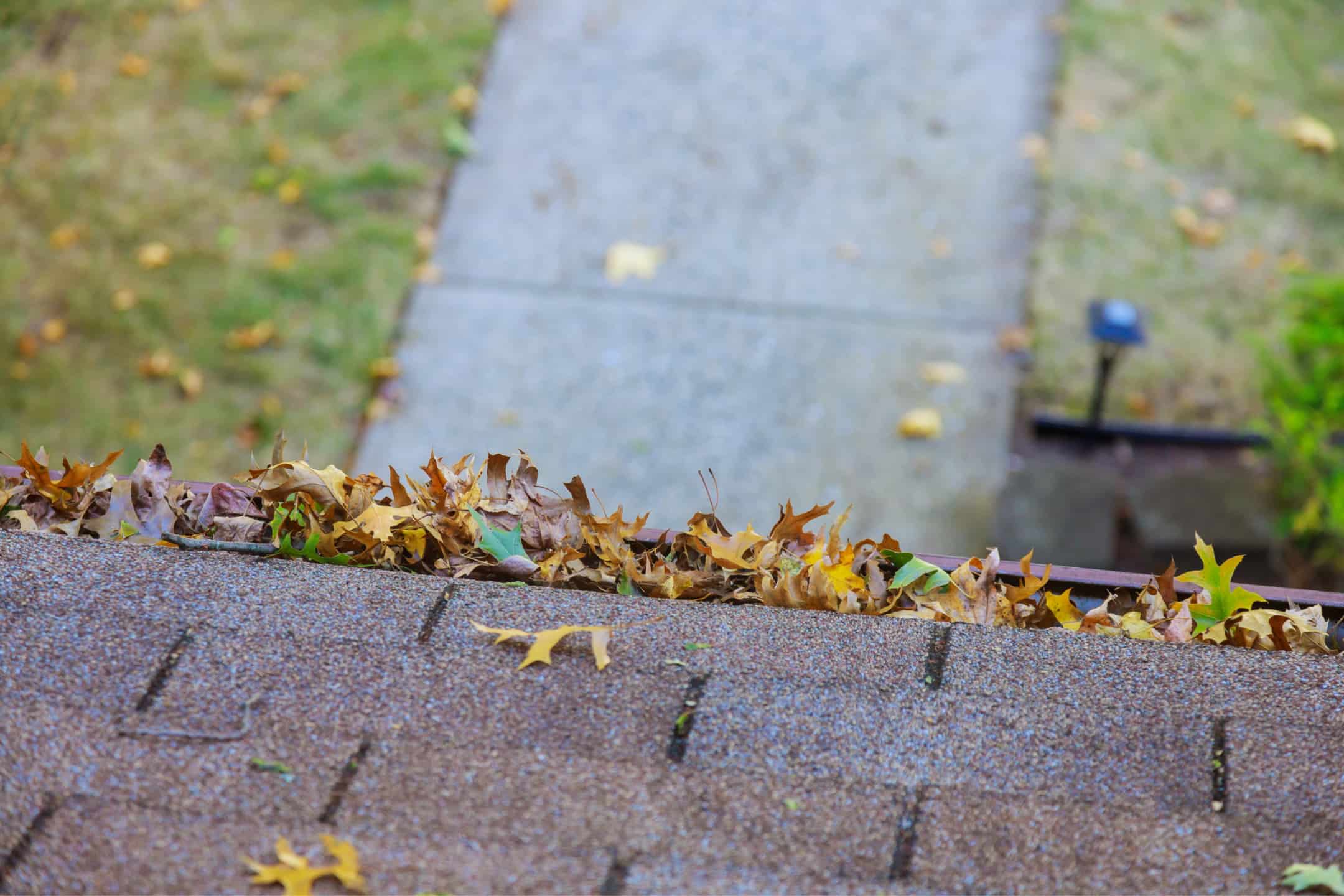
If your property sits beneath a canopy of oaks, maples, or walnuts, you already know the cycle. Every season, tree leaves settle into channels, seeds pile up at corners, and small twigs block the downspout—leaving you with clogged gutters that back up, overflow, and silently damage the structure around them.
Why Trees Are the #1 Cause of Clogged Gutters
Trees clog gutters more than any other single source of debris. The University of Missouri Extension reports that deciduous trees shed 40 to 200 pounds of dry leaves per year, depending on species and canopy size. That organic matter washes directly into your drainage channels with every rain. Seeds, needles, and bark fragments compound the buildup across all four seasons. Overhanging branches accelerate debris accumulation faster than open gutters can self-clear.
What Type of Trees Have Clogged Your Gutters the Most
The Four States region—where Kansas, Missouri, Oklahoma, and Arkansas converge—hosts some of the heaviest debris producers in the Midwest. The USDA Forest Service identifies these as the most problematic local species:
- Post oak and blackjack oak drop leathery leaves that mat together and seal gutters
- Silver maple releases thousands of winged seeds (samaras) each spring
- Black walnut sheds heavy leaves, husks, and small branches throughout the season
- Eastern red cedar produces needle clusters and pollen cones year-round
- Sweetgum drops spiky seed balls that lodge in downspouts and resist flushing
What Clogged Gutters From Tree Debris Can Cost You
When tree leaves clog gutters and unaddressed overflow occurs, structural damage follows quickly. The U.S. Environmental Protection Agency identifies improperly managed stormwater as a primary driver of residential foundation erosion. The Centers for Disease Control and Prevention notes that indoor moisture can trigger mold growth within 24 to 48 hours of water intrusion. Fascia boards exposed to chronic overflow typically begin rotting within one to two seasons, requiring costly board-by-board replacement.
How Often to Clean Gutters With Overhanging Trees
Knowing how often to clean gutters is the question most property owners get wrong. Kansas State University Research and Extension recommends cleaning at a minimum twice per year—once in late spring after pollen and seed drop, and again in late fall after leaf drop. Properties with heavy canopy or fast-shedding species such as silver maple can develop clogged gutters after a single storm, requiring gutter cleaning three to four times annually to stay ahead of overflow.
The Best Solutions When Trees Keep Clogging Your Gutters
When routine maintenance cannot keep pace, gutter guards provide lasting relief. Micro-mesh designs block tree leaves, seeds, and needle fragments while allowing water to flow freely. University of Illinois Extension research confirms that physical debris barriers reduce cleaning frequency and lower the long-term risk of water intrusion damage. Targeted pruning of branches hanging directly over the roofline can further reduce debris volume between cleanings.
Ready to stop fighting the same clogs every season? Clear Cut Gutters serves homeowners and businesses across the Four States area from its Columbus, Kansas headquarters. Call today to schedule an on-site assessment and quote for professional gutter cleaning, gutter guard installation, and correctly sized gutters matched to your property's specific needs. Don't let another season of tree leaves cost you more than it has to call, Clear Cut Gutters today at (620) 762-3449 to schedule us to come out.